

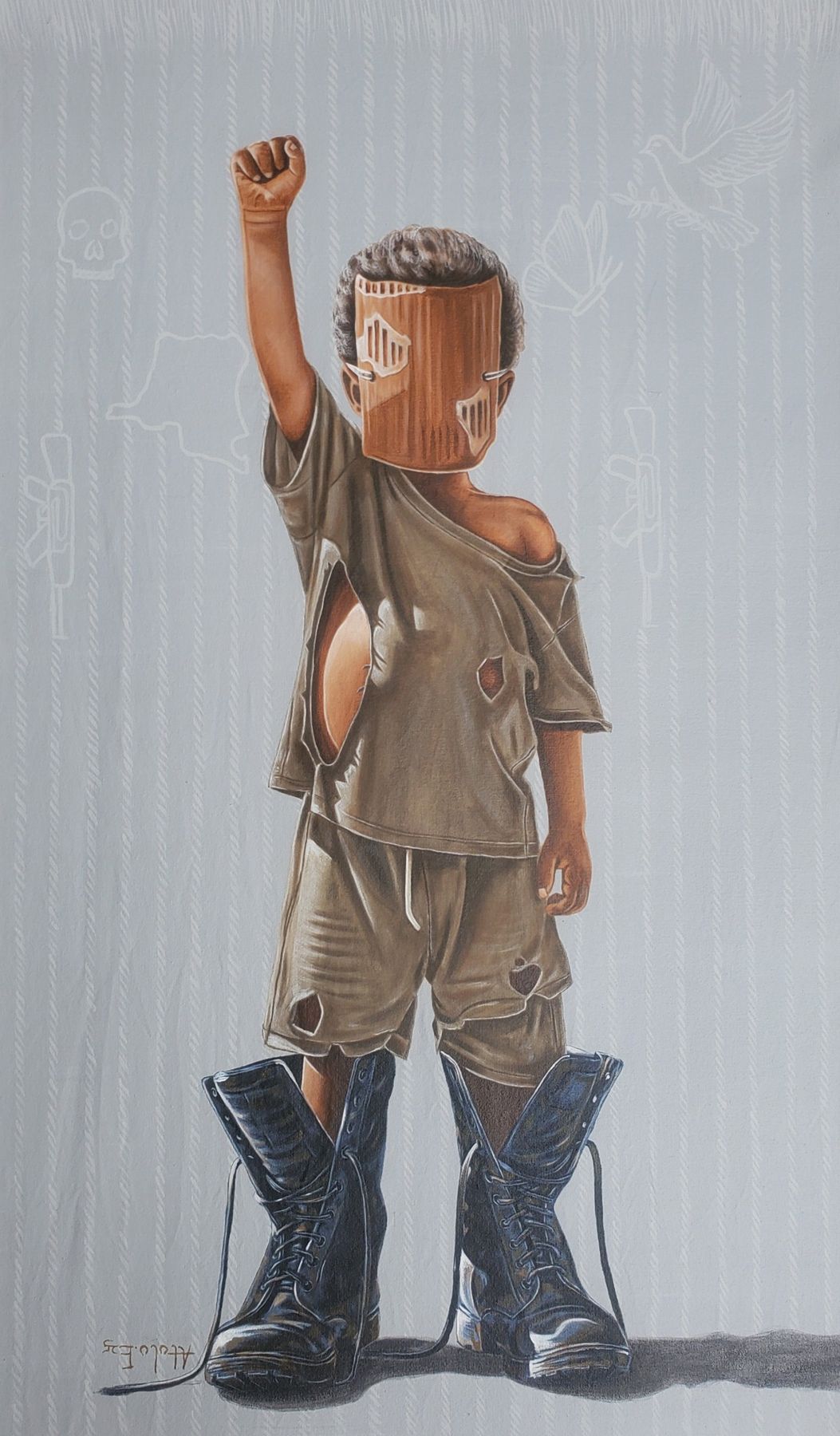
Le cri de l'espoir
A cry no one asked a child to make.Un cri qu'on n'aurait jamais dû demander à un enfant.
- YEARANNÉE
- 2025
- MEDIUMTECHNIQUE
- Acrylic on canvasAcrylique sur toile
- DIMENSIONSDIMENSIONS
- 99 × 59 cm
- EDITIONÉDITION
- Original paintingPeinture originale
- INVENTORY NO.N° D'INVENTAIRE
- AR-OW-EA-2025-001
ABOUT THIS WORKÀ PROPOS DE L'ŒUVRE+
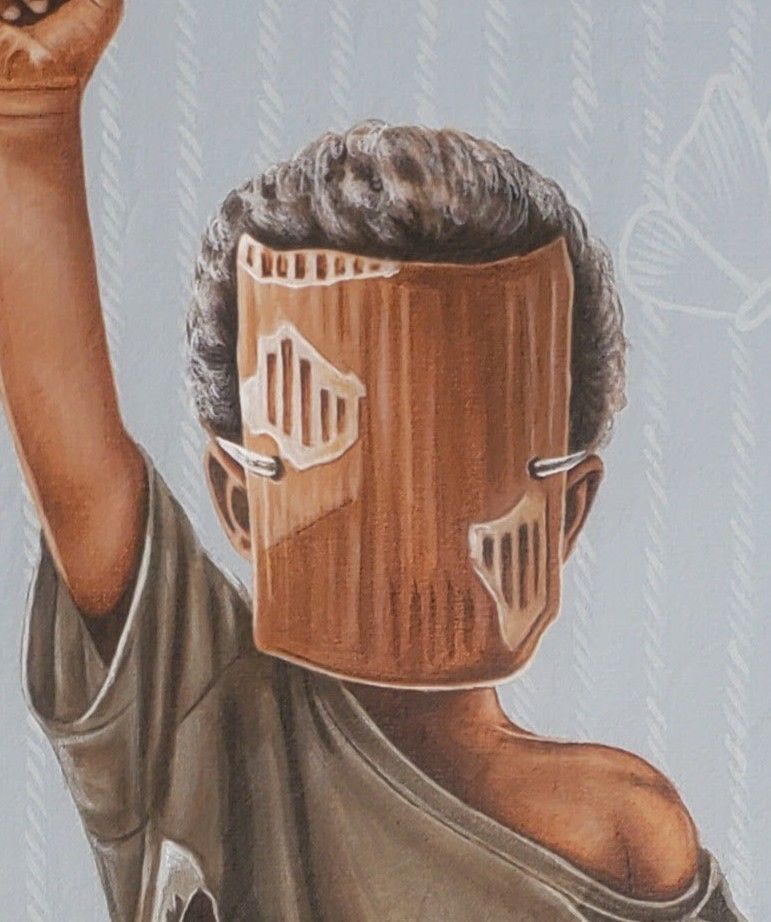
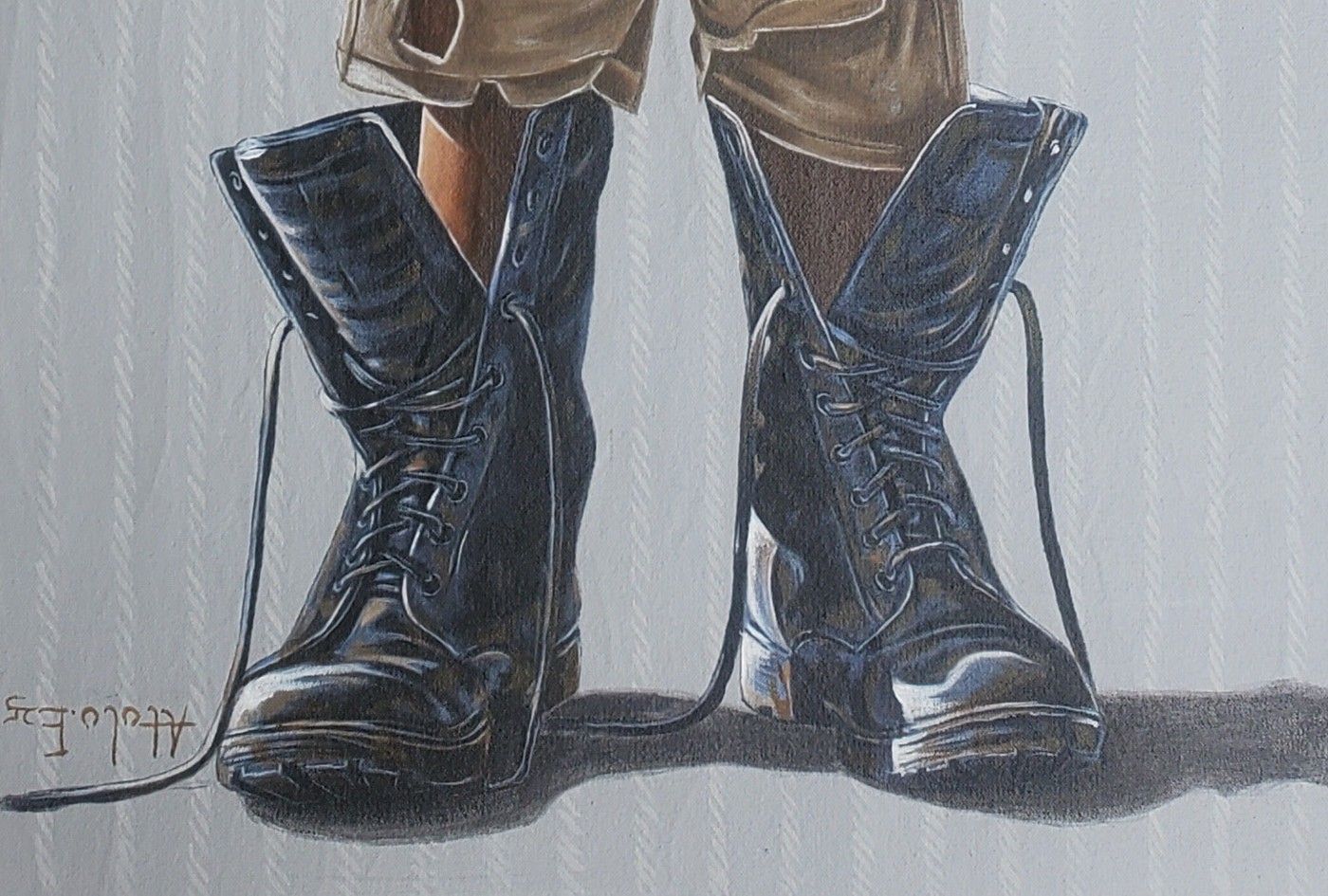
Le cri de l'espoir is a child's raised fist, standing in boots that belong to a soldier. The painting does not look away from what that means. It holds the fist and the torn clothes together, and lets the faint drawings behind him, a dove, a butterfly, a skull, weapons, speak of what he asks for and what he has seen. The mask protects him from being turned into a symbol, and lets him remain a child.Le cri de l'espoir est le poing levé d'un enfant, debout dans des bottes de soldat. Le tableau ne détourne pas le regard de ce que cela signifie. Il tient ensemble le poing et les vêtements déchirés, et laisse les dessins pâles derrière lui, une colombe, un papillon, un crâne, des armes, dire ce qu'il demande et ce qu'il a vu. Le masque le protège d'être changé en symbole et le laisse enfant.
“The mask does not erase the person: it amplifies them, it displaces them.”« Le masque n'efface pas la personne : il l'amplifie, il la déplace. »
DETAIL IMAGESDÉTAILS+
Always.Gardé avec soin.
Toujours.