Le manque
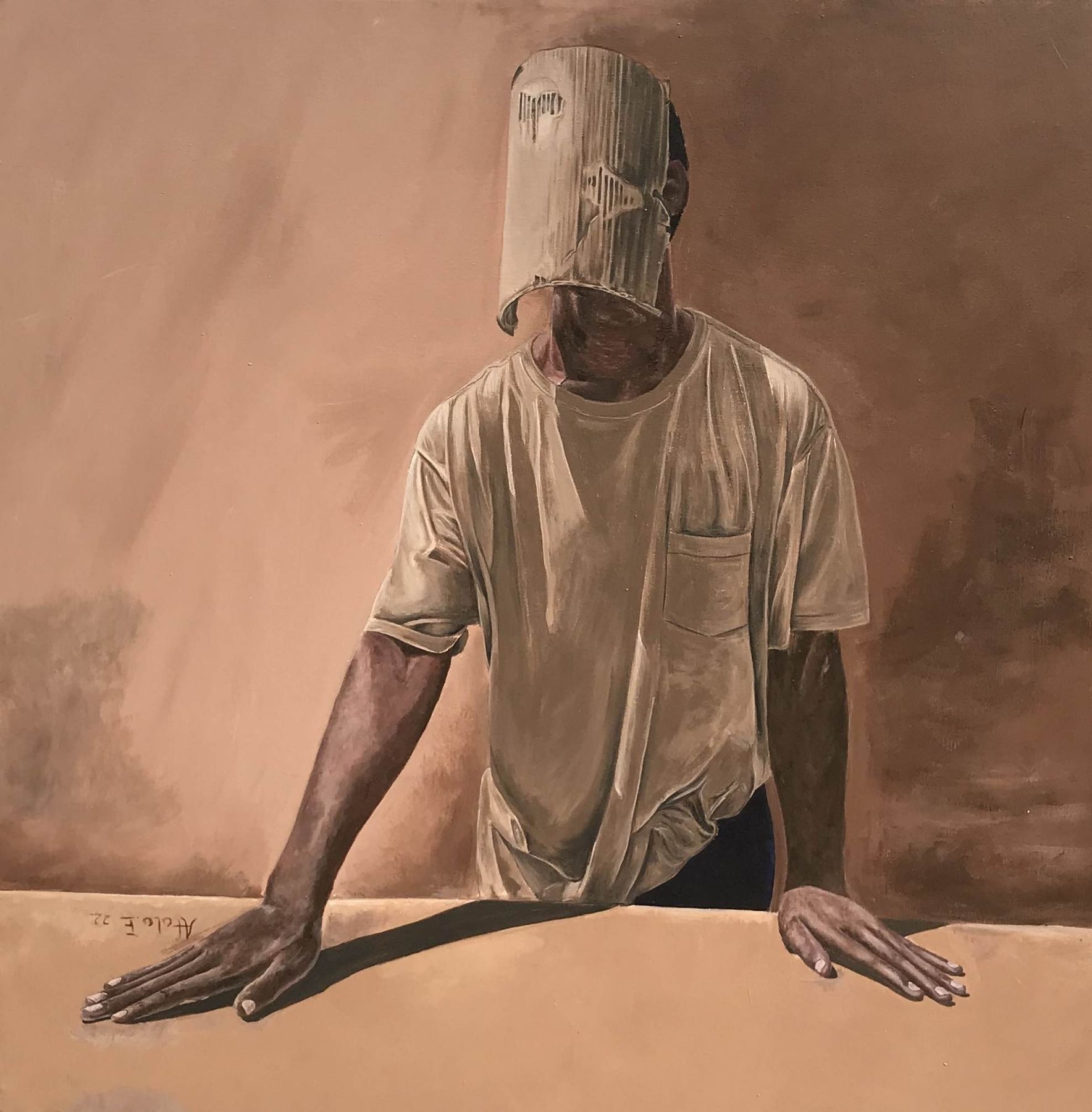
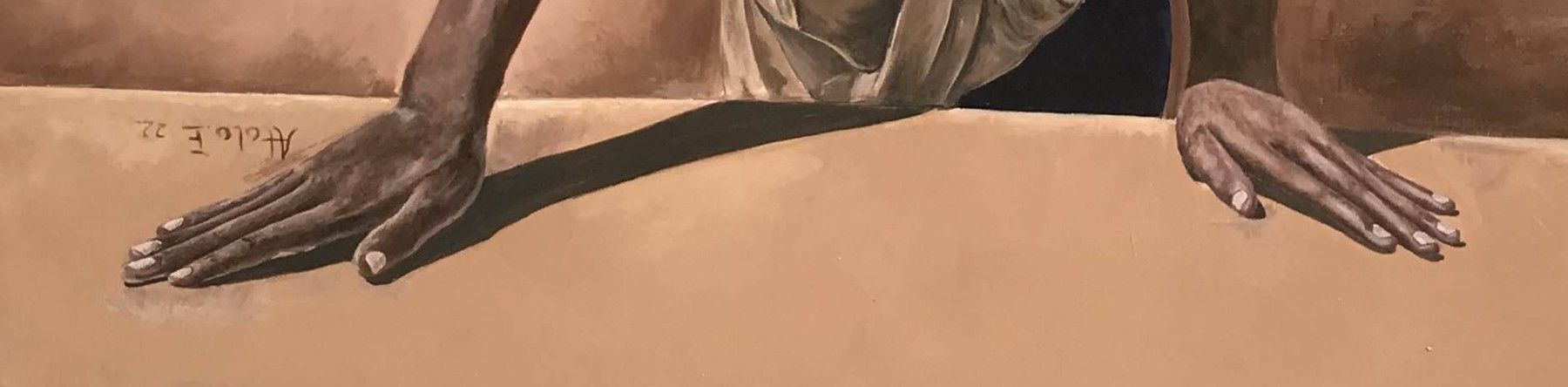
A man stands behind a ledge with both hands flat on it, a corrugated cardboard mask covering his face. The painting is warm and almost monochrome, in browns and sand.Un homme se tient derrière un rebord, les deux mains à plat dessus, un masque de carton ondulé couvrant son visage. Le tableau est chaud et presque monochrome, en bruns et en sable.
- YEARANNÉE
- 2022
- MEDIUMTECHNIQUE
- Acrylic on canvasAcrylique sur toile
- DIMENSIONSDIMENSIONS
- 100 × 100 cm
- EDITIONÉDITION
- Original paintingPeinture originale
- INVENTORY NO.N° D'INVENTAIRE
- AR-OW-EA-2022-003
ABOUT THIS WORKÀ PROPOS DE L'ŒUVRE+
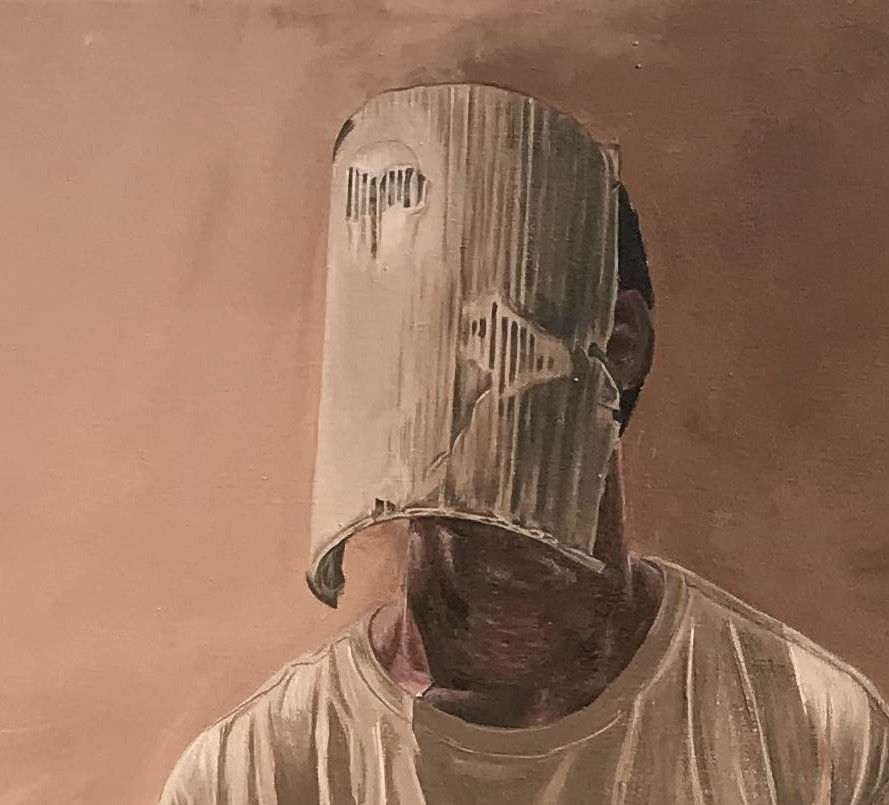
Le manque is the feeling of lacking something without being able to name it. Edom paints that lack as a missing face. The mask has slid down over the eyes, so the man cannot see and cannot be seen. A small printed mark is left on the cardboard, so the face has been replaced by an ordinary, discarded object.Le manque est le sentiment de manquer de quelque chose sans pouvoir le nommer. Edom peint ce manque sous la forme d'un visage absent. Le masque a glissé sur les yeux : l'homme ne peut plus voir ni être vu. Une petite marque imprimée reste sur le carton : le visage a été remplacé par un objet ordinaire, jeté.
His hands press flat on the ledge, the way a person steadies himself when something inside gives way. The warm, almost single-coloured light makes the room quiet, and nothing else is missing from it, only him. The painting asks what is left of a person when the face that identifies him is taken away.Ses mains s'appuient à plat sur le rebord, comme on se retient quand quelque chose cède à l'intérieur. La lumière chaude, presque d'une seule couleur, rend la pièce silencieuse, et rien d'autre n'y manque que lui. Le tableau demande ce qui reste à une personne quand le visage qui l'identifie lui est retiré.
In life a lack has no shape. On the canvas it becomes a cardboard mask, and what cannot be seen becomes something a viewer can stand in front of.Dans la vie, un manque n'a pas de forme. Sur la toile, il devient un masque de carton, et ce qui ne se voit pas devient quelque chose devant lequel on peut se tenir.
DETAIL IMAGESDÉTAILS+
Always.Gardé avec soin.
Toujours.